

Media Coverage
[Medical Times] Pioneer in South Korean Stem Cell Therapy Sets Sights on a 500-Bed Specialized Hospital
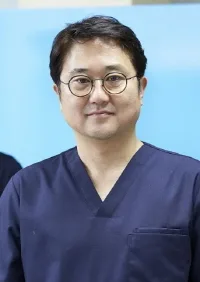
Pioneer of South Korean Stem Cell Therapy Sets Sights
on 500-Bed Specialized Hospital: PamiCell CEO Kim Hyun-soo Launches Clinic, "Preparing for the Era of For-Profit Hospitals"
[Medical Times = Reporter Lee In-bok] Kim Hyun-soo, CEO of PamiCell—the company that developed the world’s first stem cell therapy—is drawing attention as he moves forward with plans to establish a 500-bed specialized hospital based on this achievement.
The goal is to attract overseas patients by establishing a specialized stem cell hospital and to prepare for the upcoming era of for-profit hospitals.
He has already taken the first step: the Kim Hyun-soo Stem Cell Clinic, which opened on the 12th, marks the starting point. In a sense, he is now standing at a new starting line—not as CEO Kim, but as Director Kim.
On the 14th, Director Kim Hyun-soo stated, “The biotech industry—my first challenge as a doctor—has finally taken root after 10 years,” adding, “Now, as a practicing physician, I intend to move forward with the hospital business.”
He continued, “I concluded that the biobusiness inevitably leads to the hospital business,” adding, “This is precisely why I hurried to open the stem cell clinic.”
Accordingly, after completing preparations to administer stem cell treatments using more specialized equipment and methods, he first opened a clinic based on three centers: the Stem Cell Center, the Internal Medicine Center, and the Plastic Surgery Center.
This decision was based on his intention to first test whether stem cell therapy could be directly linked to the hospital business before moving forward with a full-scale hospital.
Director Kim explained, “The ultimate goal is an investment-open hospital—that is, a for-profit hospital,” adding, “However, since establishing a for-profit hospital is currently difficult under existing laws and regulations, we are exploring the feasibility of this option.”
He continued, “Our final goal is to first assess the feasibility through the clinic, gradually increase the number of beds, and establish a 500-bed hospital specializing in stem cell therapy,
” adding, “We anticipate this will be possible within about three to four years.” His dream does not end there. Once the 500-bed specialized hospital is completed, his ultimate goal is to establish Meditel and create a fully-fledged stem cell special zone.
His plan is to build the hospital and demonstrate a successful model, then attract foreign capital to transform it into a for-profit hospital, and ultimately establish Meditel to attract international patients.
Director Kim Hyun-soo noted, “It is true that even in countries like China, while there is confidence in the effectiveness and potential of stem cell therapy, there remains skepticism regarding the corresponding hospital model,
” adding, “I believe that if we can demonstrate the potential, attracting investment won’t be that difficult.” He also emphasized, “We plan to start with stroke, heart disease, and cirrhosis—for which stem cell therapy has already been approved—and expand our treatment scope to include stroke, Parkinson’s disease, and diabetes,” adding, “I believe this will provide a solid foundation for attracting international patients.”
Of course, the hospital does not rely solely on stem cells. His strategy is to devote himself to stem cell therapy and research while simultaneously establishing a high-quality medical environment.
Director Kim said, “We have already established a research center within the hospital to obtain IGMP approval,
” explaining, “This is to conduct physician-led stem cell research.” He continued, “Based on this research, we will provide higher-quality stem cell treatments while also establishing a high-end, luxurious medical environment that will satisfy international patients,” he said, adding, “Our ultimate goal is to create a global landmark in stem cell therapy.”


