

Recurrent-remitting multiple sclerosis with a 28-year history
- Patient
- A 54-year-old man
- Diagnosis
- Relapsing-remitting multiple sclerosis (diagnosed in 1994; 28 years since diagnosis)
- Treatment
- Three intravenous infusions of autologous bone marrow-derived mesenchymal stem cells (at 4-week intervals)
- Observation
- 5 months after treatment¬
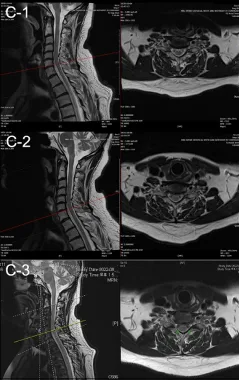
Before

Viewable after sign-in in accordance with medical advertising regulations.
Sign in to viewAfter
| Evaluation Criteria | Before Treatment | After treatment |
|---|---|---|
| Standing | Cannot stand on their own even with a walker | Standing Up from a Wheelchair Without Assistance (Day 26) |
| Walking | Not allowed | Moving a few steps forward and backward with a walker (Day 30) |
| Stairs | Not allowed | Climbing 6 steps with a walker (5 months in) |
| Lower Limb Muscle Strength (MMT, Manual Muscle Testing) | Hip Flexion P− / Knee Extension P− | Hip Flexion P+ / Knee Extension Right F− · Left F |
| Lower Limb Stiffness (MAS, Left/Right) | 3 / 3 | 1 / 2 |
| Hip Extension (ROM, Range of Motion) | 0 degrees | 10 degrees |
| Sensory (left L4–S1, light touch) | 0 (Lost) | 2 (Normal) |
| Number of self-catheterization (CIC) sessions | 6 times a day · Approximately 200 mL of residual urine | 3 times a day · Approximately 50 mL of residual urine |
| Upper Body Strength | Summit | Status Unchanged (No Change) |
Overview
After being diagnosed with multiple sclerosis in 1994, the patient underwent drug therapy with interferon beta-1a, cladribine, and other medications, as well as plasmapheresis; however, function in the lower limbs continued to decline, leaving the patient unable to move without assistance. In this case, mesenchymal stem cells harvested and cultured from the patient’s own bone marrow were administered intravenously three times at four-week intervals from July to August 2022, and this was combined with neurodevelopmental therapy and stretching exercises three times a week.
Progress
On the 24th day after the first administration, the patient stood up from a wheelchair using a walker, and by the 26th day, was able to stand without assistance. On the 30th day, the patient took a few steps forward and backward with a walker, and by the fifth month, climbed six steps with the aid of a walker. Lower limb stiffness, joint range of motion, and sensation also improved, and the use of anti-fatigue medication was discontinued. Changes related to urination occurred concurrently with a change in medication, so it is difficult to attribute them solely to the stem cell therapy. No adverse reactions were observed during the treatment or follow-up period.
Source Choi WW, Yong SY, Kim HS, et al. Case Report of Cellgram® Autologous Mesenchymal Stem Cell Treatment for Relapsing-Remitting Multiple Sclerosis. J Stem Cell Res Transplant. 2023;10(1):1044.
This is an anonymised record of an individual case. Outcomes vary from person to person, and every medical procedure carries the possibility of side effects.
This case does not guarantee any treatment outcome. Stem cell treatment is carried out only within approved clinical research and licensed indications for each condition.


