

Chronic complete quadriplegia resulting from complications of tuberculosis
- Patient
- A 46-year-old man
- Diagnosis
- Chronic complete quadriplegia (post-tuberculosis syringomyelia, onset in 2000)
- Treatment
- Four administrations of autologous bone marrow-derived mesenchymal stem cells via intrathecal and intravenous routes (over approximately 5 months)
- Observation
- 12 months after treatment
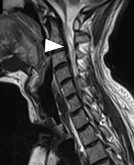
Before

Viewable after sign-in in accordance with medical advertising regulations.
Sign in to viewAfter
| Point of View | Treatment and Intervention | Observed Changes |
|---|---|---|
| Before Treatment | Completely dependent on assistance for all activities of daily living; requires a ventilator and a urinary catheter | |
| First Dose | 3 mL intrathecal · 15 mL intravenous | Cerebrospinal fluid protein: 572.6 mg/dL (reference range: 15–45); findings consistent with pre-existing lesions |
| Second Dose | 3 mL intrathecal · 15 mL intravenous | Recovered without any aftereffects, following transient fever and fatigue after administration |
| Third Dose | 3 mL intrathecal · 15 mL intravenous | Keep the cerebrospinal fluid cell count low at 2/mm³ |
| Fourth Dose | 3 mL intrathecal · 15 mL intravenous | Increased lymphocyte count in cerebrospinal fluid: 30/mm³; no test for Mycobacterium tuberculosis was performed. |
| About 3 months after the fourth dose | Inflammation levels, blood cell counts, and liver enzyme levels are maintained at stable levels | |
| 12 months after the first dose | No abnormalities on standard neurological examination or MRI; no signs of tuberculosis reactivation |
Overview
The patient suffered from tuberculous myelitis in 2000 and tuberculous meningitis in 2001. Starting in 2010, the patient developed progressive syringomyelia (a condition in which fluid-filled cavities form within the spinal cord) and underwent two shunt surgeries. Since then, the patient has continued rehabilitation while on a ventilator, but has remained in a state of complete quadriplegia. In this case, mesenchymal stem cells harvested and cultured from the patient’s own bone marrow were administered four times over a period of approximately five months. Each administration consisted of 3 mL injected into the spinal canal and 15 mL administered intravenously, and was accompanied by rehabilitation therapy.
Progress
The four doses were administered without any serious adverse reactions; although the patient experienced transient fever after the second dose, he recovered without any sequelae. During the 12-month follow-up period, there were no clinical, laboratory, or imaging findings suggestive of tuberculosis reactivation. However, a lymphocyte-predominant cell increase was observed in the cerebrospinal fluid at the time of the fourth administration, and no Mycobacterium tuberculosis testing was performed. Standard neurological examinations and MRI scans showed no changes. The patient reported changes in bladder sensation, urinary control, upper extremity strength, and lower extremity pain.
This is an anonymised record of an individual case. Outcomes vary from person to person, and every medical procedure carries the possibility of side effects.
This case does not guarantee any treatment outcome. Stem cell treatment is carried out only within approved clinical research and licensed indications for each condition.


