

Media Coverage
[The Electronic Times] Stem Cell Therapy Improves Heart Function in Patients with Myocardial Infarction-Induced Necrosis
Stem Cell Therapy Improves
Heart Function in Patients with Myocardial Infarction Mr. A, a Korean-Canadian, visited South Korea to undergo stem cell therapy for his heart condition. Mr. A had previously undergone coronary artery bypass surgery following a myocardial infarction, but because a significant portion of his heart muscle had already died, he found it difficult to lead a normal life despite having an artificial pacemaker implanted, which led him to choose to travel to South Korea. Despite warnings from his local doctor that he could die on the way, Mr. A traveled to Korea. His ejection fraction was less than 20% (the normal range is 55%; mortality rates increase sharply when it falls below 46%), indicating a very serious condition.
Currently, more than 9,000 people die annually from acute myocardial infarction, and 25% of myocardial infarction patients suffer from myocardial necrosis. Once heart muscle tissue has died, it cannot regenerate.
Professor Kim Hyun-soo’s team announced that “Cellgram-AMI,” a stem cell therapy for heart disease developed in 2011, was shown in clinical trials to improve ejection fraction by 5.9 percentage points. When converted to a percentage, this represents an improvement of approximately 12%.
Professor Kim Hyun-soo stated, “For patients suffering greatly due to impaired heart function, a 12% improvement represents a significant recovery, and we have observed such improvements in many patients.”
Patients whose cardiac function has deteriorated due to heart damage are at high risk of complications such as arrhythmia, acute mitral regurgitation, acute ventricular septal defect, cardiogenic shock, ventricular tachycardia, and ventricular fibrillation, all of which significantly impact survival.
As of May 2016, there were a total of seven stem cell therapies approved worldwide, and among them, “Cellgram-AMI” is the only one specifically for heart disease.
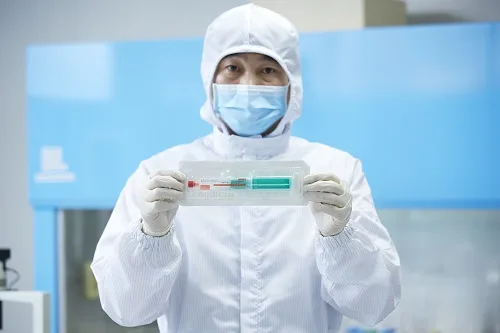
This stem cell therapy involves isolating only mesenchymal stem cells from blood drawn from the patient’s pelvic bone. These cells are then cultured in a GMP facility for approximately four weeks, where 100 mesenchymal stem cells are expanded to 70 to 90 million cells, and the resulting solution is administered via injection through the patient’s coronary arteries into the heart’s blood vessels.
Professor Kim Hyun-soo, who opened the “Kim Hyun-soo Stem Cell Clinic” this year, states that stem cell therapy can improve left ventricular function and provide benefits such as immunomodulation, anti-apoptosis, and angiogenesis.
Stem cell culture technology requires constant monitoring of cell morphology, characteristics, and infection status, and it is a sophisticated process in which the quantity of cultured cells is determined by the composition and conditions of the culture medium.
The Kim Hyun-soo Stem Cell Clinic is a medical institution specializing in stem cell therapy. It operates an on-site iGMP laboratory (aseptic cell processing facility) and has installed high-end angiography equipment to maximize the efficacy of stem cell treatments. Based on this infrastructure, the clinic provides stem cell therapy not only for heart diseases such as acute myocardial infarction, ischemic cardiomyopathy, and heart failure, but also for numerous intractable diseases including liver cirrhosis, stroke, Parkinson’s disease, and spinal cord injury.


